Auditing a contract manufacturer before signing an agreement is an essential step in manufacturing. You need to check their capabilities, quality systems, compliance records, and overall reliability. This ensures they can meet your product requirements, protect your intellectual property, and maintain consistent quality.
A proper audit is more than a facility tour. You should review certifications, study production workflows, and check the condition of equipment and technology. You also need to assess their supply chain controls and see how they manage risks, defects, and corrective actions. By examining these areas, you can determine whether the manufacturer can support your production needs or if hidden issues may cause delays, quality problems, or financial losses.
This guide explains how to audit a contract manufacturer and avoid common mistakes when choosing a manufacturing partner.
Why You Should Audit a Contract Manufacturer
In Contract manufacturing, a company outsources the production of its products to a specialised third-party manufacturer. Before you commit to a contract manufacturer, you need to be confident they can deliver the quality, consistency, and reliability your business depends on. A thorough audit helps you verify their capabilities, avoid costly surprises, and choose a partner who will support your growth rather than jeopardize it. Here are the key reasons an audit is essential before signing any agreement:
1. Reduce Risks and Hidden Costs
An audit helps you avoid quality failures, supply delays, and unexpected cost overruns. It lets you spot gaps early, preventing expensive issues after the contract is signed.
2. Ensure Compliance and Certifications
Every industry has strict standards, from FDA and GMP to ISO 9001, ISO 13485, and SOC requirements. Auditing ensures the manufacturer meets these standards and protects you from the legal risks of working with a non-compliant supplier.
3. Protect Your Brand Reputation
Your manufacturer’s output becomes your brand’s reputation. Poor quality, inconsistent production, or preventable defects can damage trust and create long-term consequences. A thorough audit helps ensure your products reflect the standard your customers expect.
What You Need to Do Before Auditing a Contract Manufacturer
Before you visit a contract manufacturer, it’s important to prepare thoroughly. Clear expectations and proper documentation will help you conduct a focused audit and make confident decisions. Here is how to prepare before conducting the actual audit:
1. Define Your Requirements and KPIs
Start by outlining your product specifications, quality standards, delivery timelines, and expected production volumes. Be clear about scalability needs as well. These requirements will guide your audit and help you evaluate whether the manufacturer can meet both your current and future demands.
2. Gather Documentation to Review Ahead of the Visit
Ask the manufacturer for key documents before you arrive. These may include certifications, process documents, quality manuals, and standard operating procedures. If possible, review financial stability reports and request case studies or client references. This early review helps you identify areas that need extra attention during the audit.
3. Create an Audit Checklist
Prepare a checklist to keep your evaluation organized. Include essential areas such as quality systems, supply chain processes, production equipment, technology, and workforce capabilities. Be sure to add health, safety, and compliance criteria as well. A structured checklist ensures you remain thorough and consistent throughout the audit.
How to Audit a Contract Manufacturer Step by Step
Once your preparation is complete, the next step is to conduct a structured, on-site audit. This process helps you verify everything from compliance and quality systems to equipment, workforce skills, and overall operational reliability. Here’s how to approach each stage of the audit effectively:
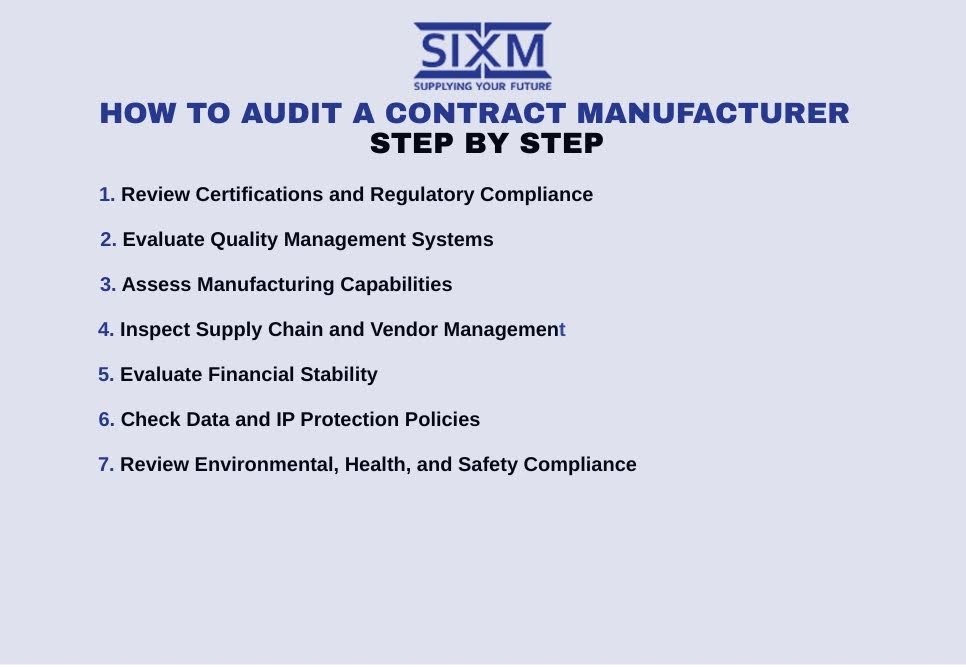
Step 1. Review Certifications and Regulatory Compliance
Begin by checking whether the manufacturer holds the certifications required for your industry. Look for standards such as ISO 9001, ISO 13485, or ISO 14001, as well as GMP certifications. Confirm any additional regulatory approvals relevant to your product category, and review environmental and safety compliance records, including OSHA, REACH, or RoHS. Strong certifications signal a commitment to consistent quality and legal compliance.
Step 2. Evaluate Quality Management Systems
Examine how the manufacturer controls quality from start to finish. Review their incoming material inspections, in-process checks, and final product testing methods. Assess how they document non-conformances and whether they follow structured CAPA procedures to prevent repeat issues. Make sure their document control and traceability systems are reliable and well-maintained.
Step 3. Assess Manufacturing Capabilities
To understand whether the manufacturer can meet your production needs, evaluate three key areas: equipment, workforce, and workflow.
- Equipment and Technology: Check the age, condition, and maintenance of machinery, and ensure their production capacity and automation tools match your volume and quality needs.
- Workforce Skills: Evaluate the team’s experience, training, certifications, and turnover to confirm they can consistently produce products similar to yours.
- Production Workflow: Review the production floor for efficient material flow, minimal bottlenecks, and lean practices that support smooth, delay-free operations.
Step 4. Inspect Supply Chain and Vendor Management
Ask how the manufacturer selects and manages its suppliers. Review their approved vendor list, sourcing policies, and lead times. Check whether they have contingency plans for supply disruptions and how often they audit their own suppliers. A strong supply chain system reduces the risk of shortages and inconsistencies.
Step 5. Evaluate Financial Stability
Assess the manufacturer’s financial health to ensure they can support long-term production. Look for indicators such as steady growth, diversified clients, and controlled debt levels. Financial instability can lead to sudden shutdowns, missed deadlines, or quality shortcuts.
Step 6. Check Data and IP Protection Policies
Review how the manufacturer protects sensitive information. Confirm that they use strong NDAs, secure digital systems, and have strict access controls inside the facility. Ensure they follow basic cybersecurity practices to prevent unauthorized access. Robust IP protection is critical, especially for proprietary products.
Step 7. Review Environmental, Health, and Safety Compliance
Observe workplace cleanliness, hygiene standards, and overall safety practices. Review waste disposal methods and any sustainability initiatives. A safe and environmentally responsible manufacturer is more reliable, more compliant, and less likely to face legal or operational disruptions.
How to Evaluate Your Audit Results
Once the audit is complete, you need to analyze your findings and determine whether the manufacturer meets your expectations. Here’s how to turn your audit observations into a clear decision:
1. Score and Compare Findings
Use a weighted scoring system to evaluate each part of the audit. Separate must-have requirements from nice-to-have features, and compare multiple suppliers to see which one best aligns with your production needs.
2. Identify Red Flags
Watch for warning signs such as poor documentation, high defect rates, outdated equipment, or inconsistent statements from management. Limited transparency or restricted access during your visit is also a major red flag that suggests deeper issues.
3. Follow Up on Corrective Actions
When problems are identified, request a corrective action plan with clear timelines. Decide whether a follow-up audit is needed to confirm improvements. If critical issues cannot be resolved, it may be best to choose a different manufacturer.
Key Questions to Ask a Contract Manufacturer
Asking the right questions helps you uncover how the manufacturer truly operates and whether they can support your quality, timeline, and growth requirements. These conversations often reveal more than documents or facility tours.
Here are the key questions you should ask during your evaluation:
- What is your typical lead time?
- How do you handle production delays or material shortages?
- What quality issues have you faced in the past, and how were they resolved?
- What is your capacity for scaling production?
- Do you subcontract any work?
- How do you protect a client's IP?
Practical Tools and Frameworks for Your Audit
Having the right tools and reference materials makes the audit process faster, more accurate, and more consistent across different suppliers. Here are useful resources to support your contract manufacturer audit:
- Audit checklist: A detailed checklist helps you stay organized and ensures you evaluate every critical area during your on-site visit.
- Supplier scoring template: A scoring sheet allows you to compare multiple manufacturers objectively using weighted criteria.
- Compliance certification guides: The legal and compliance guidelines in contract manufacturing help you understand key certifications such as ISO, GMP, or industry-specific standards so you can verify them confidently.
- Industry-specific audit frameworks: Specialized frameworks for sectors like medical devices, electronics, or cosmetics provide deeper guidance on requirements unique to your product category.
Common Mistakes to Avoid During the Audit
Even a well-planned audit can fall short if you overlook key areas or rely too heavily on what you’re told. Avoiding common mistakes will help you gather accurate insights and make a confident final decision. Here are the pitfalls you should watch out for:
- Accepting claims without proof: Never rely solely on verbal assurances. Always ask for documents, records, and real evidence to validate any claims.
- Failing to conduct unannounced visits: Surprise visits reveal the true day-to-day operations and help you spot issues that may be hidden during scheduled tours.
- Not interviewing production staff: Talking only to management can give you a limited view. Operators and line workers often provide the most accurate insights into daily processes.
- Ignoring cultural or communication barriers: Poor communication or mismatched expectations can lead to delays, misunderstandings, and quality issues, especially with overseas partners.
- Forgetting to audit sustainability or ethical standards: Environmental practices, labor conditions, and ethical sourcing are increasingly important and can directly impact your brand reputation.
Choosing the Right Contract Manufacturer
Once your audit is complete and the findings are organized, you need a clear way to decide which manufacturer is the best fit. A structured decision-making approach helps you choose confidently and avoid costly mistakes. Here’s how to evaluate your options effectively:
- How to compare candidates Start by reviewing your audit scores side by side and assessing how each supplier performed in the areas most important to your product and business goals.
- Factors that matter most, depending on industry Consider the requirements specific to your sector, such as stringent certification needs for medical devices or high-volume capability for consumer electronics.
- Balancing cost vs. capability Look beyond price and weigh cost against quality, reliability, scalability, and long-term value. The lowest bid is rarely the best choice.
- When to choose multiple manufacturers Using more than one manufacturer can reduce risk and improve supply chain reliability, especially when production involves high volumes, complex components, or strict timelines.
For detailed insights and differentiation, read our blog on presenting the difference between contract manufacturing and outsourcing.
Turn Your Audit Insights into Smarter Manufacturing Decisions with SIXM
A thorough contract manufacturer audit is essential for protecting product quality, maintaining brand integrity, and ensuring a stable, efficient supply chain. By preparing effectively, evaluating each area carefully, and comparing suppliers with a clear framework, you can make a confident decision that supports your long-term growth.
Partner with SIXM today to secure a trusted, scalable, and quality-driven contract manufacturing solution for your products. We help businesses assess, select, and manage reliable manufacturing partners with precision and expertise.