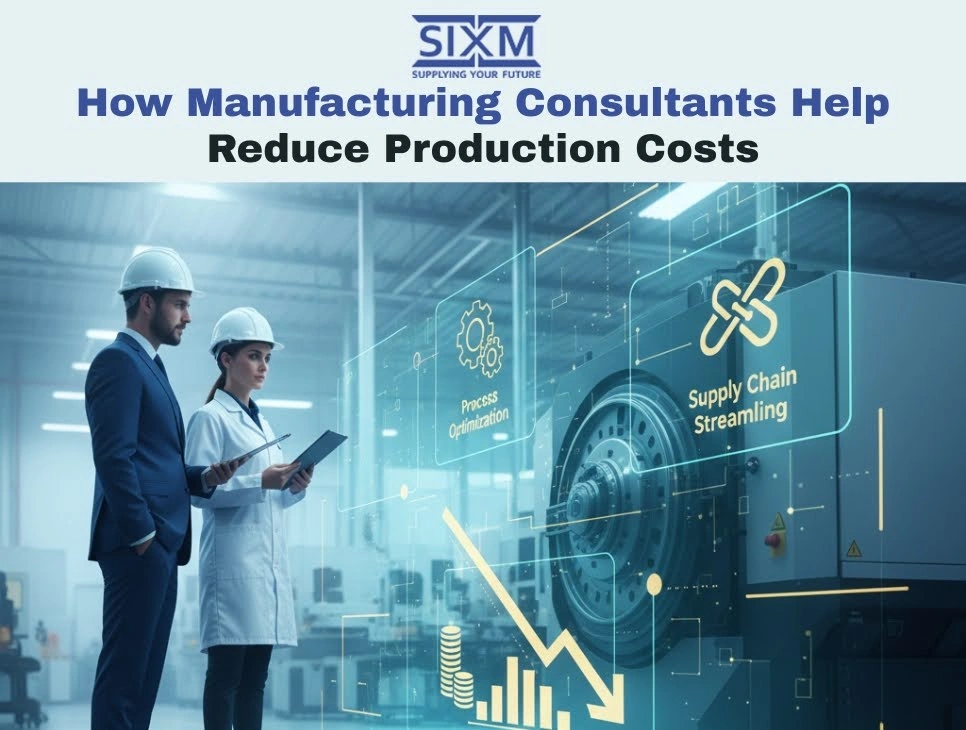
In Manufacturing operations, consultants bring experience, tools, and strategies to help SMEs (Small and Medium-sized Enterprises) and startups build a foundation for sustainable growth. With their expert guidance, companies can optimize workflows, improve resource utilization, enhance product quality, and make smarter decisions from day one.
Rising production costs, unexpected quality issues, and supply chain disruptions make it difficult for small teams to scale with confidence. Even the most innovative products can struggle without efficient systems and well-structured processes. In an industry where operational excellence defines long-term success, the right consulting support can transform early-stage challenges into opportunities for growth and competitive advantage.
This blog explains how manufacturing consulting supports SMEs and startups in building efficient, scalable, and high-quality production systems.
What Is Manufacturing Consulting?
Manufacturing consulting is a service that helps businesses improve and streamline their production operations. It provides expert guidance to enhance efficiency, quality, and scalability, especially valuable for SMEs and startups that lack in-house manufacturing expertise. Its Core Functions include:
- Improving operational efficiency
- Optimizing production processes
- Strengthening quality management systems
- Enhancing supply chain and logistics performance
- Guiding technology adoption and automation strategies
With rapid advances in digital manufacturing and automation, consultants help companies adopt modern tools and practices, remain competitive, and prepare for future growth.
Why SMEs and Startups Need Manufacturing Consulting
SMEs and startups often encounter challenges that make manufacturing harder to manage and even harder to scale. These obstacles can slow growth, increase costs, and create operational risks, making expert guidance essential. The key reasons they need manufacturing consulting include:
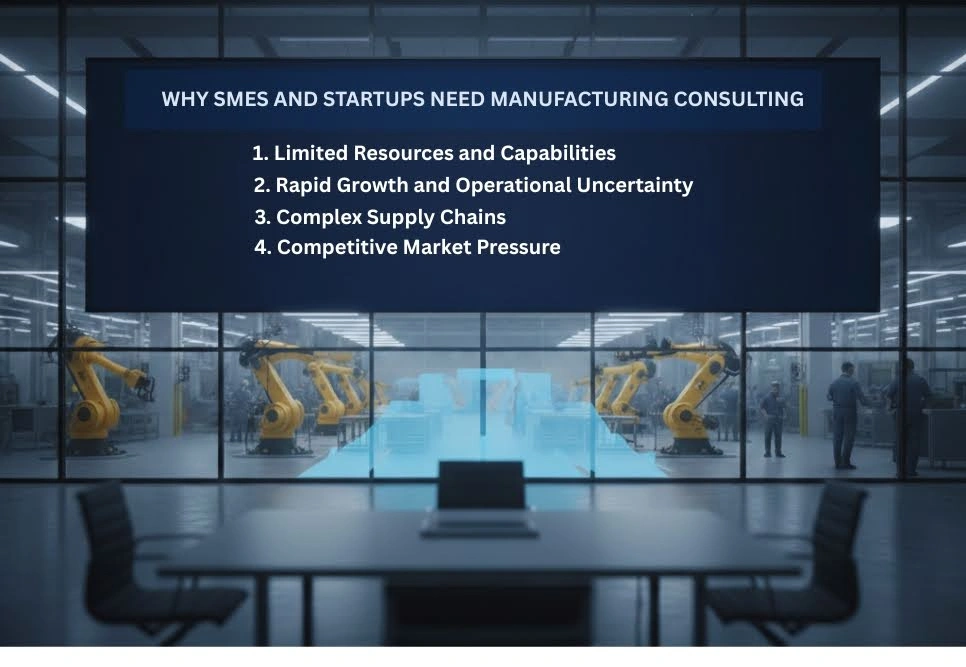
1. Limited Resources and Capabilities
Smaller companies often operate with tight budgets that restrict investments in equipment and skilled talent. Without in-house technical or engineering expertise, scaling production becomes challenging and can lead to inefficiencies or costly missteps.
2. Rapid Growth and Operational Uncertainty
As demand increases, production volumes can shift quickly. SMEs need flexible systems that adapt without causing delays or quality issues. Consulting support helps avoid early-stage mistakes that can disrupt momentum and hinder long-term growth.
3. Complex Supply Chains
Managing suppliers and procurement processes is rarely straightforward. SMEs often struggle with unreliable vendors, slow material flow, or high lead times. Consultants help streamline supplier selection, improve procurement practices, and ensure smoother supply chain operations.
4. Competitive Market Pressure
To stand out, businesses must operate efficiently and keep costs under control while maintaining high product quality. With rising customer expectations and intense competition, consulting guidance helps organizations build lean, resilient, and high-performing operations.
Key Areas Where Manufacturing Consultants Deliver Value
Manufacturing consultants support SMEs and startups by improving efficiency, strengthening quality, and guiding smart operational decisions. Their expertise becomes especially valuable when businesses need to refine systems, scale production, or adopt modern technologies. The main areas where consultants deliver meaningful value include:
1. Process Optimization
Consultants apply lean manufacturing, Six Sigma, and value stream mapping to identify inefficiencies and eliminate waste. By removing bottlenecks and streamlining workflows, they help companies achieve smoother, faster, and more predictable production.
2. Production Planning & Workflow Design
Effective production begins with a smart layout and a solid plan. Consultants optimize facility layouts, create practical production schedules, and support workforce planning to ensure that people, machines, and materials work together efficiently.
3. Quality Assurance & Compliance
Maintaining high quality requires consistent systems. Consultants guide businesses through ISO certification, help meet regulatory and safety requirements, and design quality control processes that reduce defects and improve reliability.
4. Technology Integration & Industry 4.0 Roadmapping
As manufacturing becomes more digital, consultants help companies adopt the right technologies. They recommend automation and robotics solutions, introduce IoT-based smart factory tools, and support the selection and implementation of ERP/MRP systems.
5. Supply Chain & Vendor Management
Strong supply chains reduce delays and lower costs. Consultants assist with supplier qualification, improve logistics operations, and build better inventory management systems to keep production running smoothly and efficiently.
6. Cost Reduction & Financial Planning
To support sustainable growth, consultants analyze production costs, benchmark performance, and plan capital investments. They also project ROI for new technologies, helping businesses make informed financial decisions for long-term success.
Challenges SMEs and Startups Face Without Consulting Support
Without expert guidance, SMEs and startups often find manufacturing more complex than expected. Limited resources, rapid growth, and evolving customer demands can lead to operational issues that slow progress and increase costs. The following are some challenges that highlight why consulting support becomes so valuable.
1. Underestimating Production Complexity
Many early-stage companies misjudge how intricate production can be. As they scale, they encounter unexpected bottlenecks, equipment constraints, and workflow disruptions that hinder growth and delay deliveries.
2. Poor Inventory Control
Inaccurate inventory records, stockouts, and overstocking create inefficiencies that impact cash flow and production timelines. Poor inventory systems often lead to delays, rushed orders, or wasted materials.
3. Lack of Documentation and SOPs
Without documented processes and standard operating procedures (SOPs), teams operate inconsistently. This results in quality variations, longer training times, and repeated mistakes that could easily be avoided with structured guidelines.
4. Overautomation or Misaligned Tech Investments
Some SMEs invest in automation or digital tools too early or without proper evaluation. These costly purchases often fail to solve actual problems, leaving equipment underutilized and budgets strained.
5. Compliance Issues
Regulatory and safety requirements can be complex and easy to overlook. Non-compliance may lead to production shutdowns, fines, or product recalls—serious risks for small businesses.
Benefits of Hiring a Manufacturing Consultant for SMEs and Startups
Bringing in a manufacturing consultant offers significant advantages for SMEs and startups, especially when they need to scale efficiently, reduce risks, and improve product quality. Consultants provide the expertise and structure that help young businesses operate smarter and grow faster.
1. Faster Time-to-Market
Consultants streamline product development and production ramp-up by improving workflows and eliminating delays. Their guidance helps businesses move from prototype to full-scale production more quickly and confidently.
2. Reduced Operational Costs
Through waste elimination and better resource utilization, consultants help cut unnecessary expenses. They ensure materials, labor, and equipment are used efficiently, leading to lower operating costs without sacrificing performance.
3. Higher Product Quality
By standardizing processes and strengthening quality assurance (QA) systems, consultants help companies produce consistent, reliable products. This reduces defects, improves customer satisfaction, and enhances brand reputation.
4. Better Scalability
Consultants design systems that support long-term growth. They implement flexible production setups that can adapt to changing volumes, new product lines, or expanding operations—making scaling smoother and less risky.
5. Avoiding Costly Mistakes
Many SMEs struggle due to avoidable mistakes such as poor facility layouts, choosing the wrong suppliers, or running untested processes. Consultants bring industry experience that helps businesses avoid these pitfalls and make sound, strategic decisions.
What to Expect During a Typical Consulting Engagement
A manufacturing consulting engagement follows a clear process designed to identify issues, implement solutions, and support long-term improvement. Here is how it typically unfolds:
1. Initial Assessment
The consultant reviews your current operations through walkthroughs, data analysis, and team discussions. This helps identify bottlenecks, quality gaps, and improvement opportunities.
2. Strategy Development
Based on the assessment, the consultant creates a tailored action plan. This includes workflow changes, technology recommendations, and KPIs to track progress.
3. Implementation Support
Consultants guide your team through training staff, integrating new processes, and resolving challenges to ensure smooth adoption.
4. Continuous Improvement
After implementation, the consultant monitors results and suggests refinements. This ongoing support keeps your operations efficient and scalable as you grow.
Case Study Examples
Real-world scenarios show how manufacturing consulting can directly impact SME and startup performance. These examples highlight common challenges and the improvements achieved through expert guidance.
1. Startup Scaling From Prototype to Production
A hardware startup struggled to move from prototype to consistent batch production. A consultant redesigned their workflow, introduced basic quality checks, and optimized supplier selection. As a result, production time dropped, defects decreased, and the startup met its first large customer order successfully.
2. SME Reducing Costs Through Workflow Redesign
A mid-sized consumer goods manufacturer faced rising costs and constant delays. The consultant mapped their processes, eliminated waste, and restructured the facility layout. This led to shorter lead times, lower material waste, and significant savings in labor hours.
3. Company Adopting Automation Strategically
A small electronics company invested too quickly in automation and saw little return. A consultant evaluated their needs, replaced unnecessary tools with practical solutions, and aligned automation with real bottlenecks. The business achieved better output with lower operational costs and fewer equipment issues.
Ready to launch your venture in Mexico? Read our Starting a Business in Mexico: Complete Guide and get every step you need for a successful start.
Cost of Manufacturing Consulting: What Influences Pricing?
The cost of hiring a manufacturing consultant varies based on the size of the project, the level of expertise required, and the company’s operational needs. Understanding the factors that influence pricing helps SMEs and startups budget effectively and choose the right engagement model.
1. Scope and Project Size
Larger or more complex projects, such as full facility redesigns or multi-product optimization, require more time and resources, resulting in higher costs.
2. Duration of Engagement
Short-term advisory projects are less expensive, while longer engagements involving implementation, training, or ongoing support cost more.
3. Level of Customization
Tailored strategies, detailed analyses, and custom system designs typically increase pricing due to the specialist effort involved.
4. Technology or Equipment Involvement
Projects that include ERP/MRP selection, automation planning, or equipment setup require additional expertise, impacting overall cost.
5. Onsite vs. Remote Work
Onsite assessments and hands-on support add travel and time expenses, whereas remote consultations tend to be more cost-effective.
SIXM: Your Partner for Manufacturing Consulting Success
Manufacturing consulting gives SMEs and startups the guidance they need to operate efficiently, reduce risks, and scale with confidence. As Industry 4.0 continues to reshape the sector, expert support becomes even more valuable for achieving sustainable growth.
SIXM offers expert support tailored to your needs, providing trusted Mexico-manufacturing-consulting-services to help you build efficient, scalable, and future-ready production systems. Contact us today to get started.