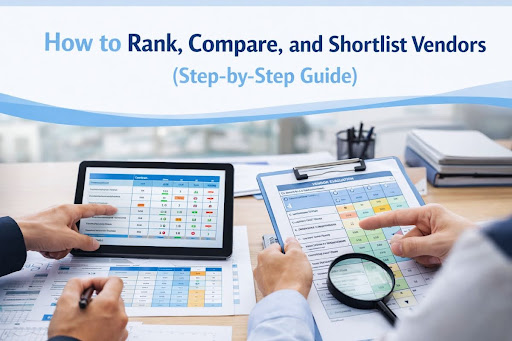
Ranking, comparing, and shortlisting vendors is a critical step in the vendor evaluation process used by procurement teams. Research shows companies using structured sourcing strategies can achieve 8–12% cost savings while improving supplier reliability.
Businesses can rank suppliers using weighted scoring systems, compare top candidates through evaluation matrices, and shortlist the strongest options through due diligence such as reference checks, capability verification, and trial orders. This guide explains how to rank vendors, compare suppliers, and shortlist the best partners with practical steps and best practices.
Why Vendor Evaluation Matters
Vendor evaluation is more than selecting the lowest bidder. It helps businesses identify suppliers that can consistently meet operational requirements while supporting long-term supply chain stability.
Poor vendor selection can lead to:
- Inconsistent product quality
- Supply chain disruptions
- Production delays
- Increased operational costs
- Compliance and regulatory issues
When businesses properly evaluate suppliers, they gain a clearer understanding of vendor capabilities and can make more informed procurement decisions.
Common Criteria Used in Vendor Evaluation
Procurement teams typically use several supplier evaluation criteria when assessing potential vendors. These criteria help ensure suppliers meet operational, financial, and compliance requirements.
Common vendor evaluation factors include:
- Cost competitiveness
- Product quality
- Production capacity
- Delivery reliability
- Compliance certifications
- Financial stability
- Communication responsiveness
Using these criteria helps create a structured supplier evaluation framework that supports objective vendor selection.
How to Rank Vendors?
Ranking vendors helps businesses identify which suppliers best meet their sourcing requirements. Supply chain research suggests that 60% of supplier disruptions are linked to poor vendor selection or weak evaluation processes. highlighting the importance of structured vendor assessment.
Below is a step-by-step process for ranking vendors effectively.
Step 1: Define Vendor Evaluation Criteria
The first step in ranking vendors is identifying the key criteria that will be used to evaluate suppliers. These criteria should reflect your business priorities and procurement goals.
Common vendor evaluation criteria include:
- Product quality
- Pricing and total cost
- Production capacity
- Delivery reliability
- Certifications and compliance
- Communication and responsiveness
- Financial stability
Selecting the right criteria ensures that vendors are evaluated based on factors that directly impact your supply chain performance.
Step 2: Assign Weights to Each Criterion
Not all evaluation criteria carry the same importance. Assigning weights helps reflect their significance in decision-making.
Example weighting model:
| Criteria | Weight |
|---|---|
| Product Quality | 30% |
| Pricing | 20% |
| Delivery Reliability | 20% |
| Production Capacity | 15% |
| Compliance & Certifications | 15% |
This weighting system ensures that more critical factors have a greater influence on the final vendor ranking.
Step 3: Collect Vendor Information
Once the evaluation criteria and weights are established, the next step is gathering relevant data from each vendor.
This information may include:
- Product specifications and samples
- Pricing quotations
- Production capacity details
- Delivery lead times
- Compliance certifications
- Company background and financial stability
Accurate and verified data helps ensure that vendors are ranked fairly and consistently.
Step 4: Score Each Vendor
Each vendor should then be scored against the evaluation criteria using a standardized rating scale, such as 1 to 10.
For example:
- 10 = Excellent performance
- 7–9 = Strong performance
- 4–6 = Average performance
- 1–3 = Weak performance
These scores represent how well each vendor performs in each evaluation category.
Step 5: Calculate Weighted Scores
Multiply each vendor score by the assigned criterion weight. Add the weighted scores to determine the vendor’s total ranking score.
This ensures suppliers performing well in high-priority areas receive higher rankings.
Step 6: Create a Vendor Ranking List
Finally, rank vendors from highest to lowest based on their total scores. The top vendors move forward to the comparison stage.
Best Practices for Vendor Ranking
- Use clear and measurable evaluation criteria.
- Involve multiple departments in the scoring process.
- Verify vendor data through documentation and samples.
- Avoid ranking suppliers based only on price.
- Regularly update vendor rankings based on supplier performance.
How to Compare Vendors?
After ranking vendors, the next step is to compare the top candidates side by side. Vendor comparison helps businesses identify strengths, weaknesses, and overall value among suppliers. This step ensures decisions are based on multiple factors, not just price.
Below are the steps to compare vendors effectively.
Step 1: Create a Vendor Comparison Matrix
Organize vendor data in a comparison table. This helps evaluate suppliers using the same criteria.
Example:
| Vendor | Quality | Cost | Capacity | Delivery | Communication | Score |
|---|---|---|---|---|---|---|
| Vendor A | 9 | 8 | 7 | 9 | 8 | 8.3 |
| Vendor B | 8 | 9 | 8 | 7 | 7 | 7.9 |
| Vendor C | 7 | 8 | 9 | 8 | 9 | 8.2 |
A matrix makes it easier to identify the strongest vendors.
Step 2: Compare Total Cost
Do not compare vendors based only on unit price. Consider the total cost, including:
- Shipping costs
- Import duties and taxes
- Packaging costs
- Inspection or testing fees
- Minimum order quantities
This helps determine the real cost of working with each supplier.
Step 3: Evaluate Product Quality
Review product samples and specifications. Check:
- Material quality
- Manufacturing consistency
- Product durability
- Finishing and packaging
High product quality reduces returns and customer complaints.
Step 4: Review Production Capacity
Confirm that vendors can meet your order volume.
Check factors such as:
- Production capacity
- Lead times
- Manufacturing equipment
- Workforce capability
Suppliers must be able to scale as your business grows.
Step 5: Assess Communication and Reliability
Evaluate how suppliers communicate during the sourcing process.
Look for vendors who:
- Respond quickly
- Provide clear answers
- Share production updates
- Handle issues professionally
Strong communication improves long-term supplier relationships.
Best Practices for Vendor Comparison
- Use a standardized comparison matrix.
- Evaluate both cost and quality factors.
- Request product samples before making decisions.
- Conduct factory audits when possible.
- Review supplier risks such as compliance and financial stability.
How to Shortlist Vendors?
After ranking and comparing suppliers, the final step is shortlisting the best candidates. Shortlisting narrows a large supplier pool into a small group of qualified vendors. Most companies shortlist three to five vendors for final evaluation, negotiations, or trial orders.
Step 1: Select Top-Performing Vendors
Start by identifying vendors with the highest scores from the ranking and comparison stages.
Focus on suppliers that demonstrate:
- Strong product quality
- Competitive pricing
- Reliable delivery timelines
- Good communication
These vendors should move forward to the next stage.
Step 2: Verify Supplier Capabilities
Before finalizing the shortlist, confirm that suppliers can meet your operational requirements.
Check factors such as:
- Manufacturing capacity
- Production lead times
- Compliance certifications
- Quality control processes
This step helps eliminate vendors that may struggle to meet long-term demand.
Step 3: Conduct Supplier Due Diligence
Perform deeper checks to verify supplier credibility.
This may include:
- Reviewing customer references
- Evaluating financial stability
- Conducting factory audits
- Checking export experience
Due diligence helps reduce sourcing risks.
Step 4: Request Trial Orders or Pilot Production
Place small test orders with shortlisted vendors.
Trial orders help evaluate:
- Product quality consistency
- Production efficiency
- Delivery reliability
- Communication during production
This provides real-world insight into supplier performance.
Step 5: Finalize Preferred Vendors
Based on trial order results and negotiations, select the vendors that best meet your sourcing needs.
Businesses often maintain multiple approved suppliers to reduce dependency on a single vendor.
- nd delivery terms.
- Monitor supplier performance regularly after onboarding.
Learn how procurement documents help evaluate suppliers in our guide on RFI vs RFP vs RFQ in product sourcing evaluation.
Common Mistakes in Vendor Selection
Many sourcing problems occur due to avoidable mistakes.
Common vendor evaluation mistakes include:
- Choosing suppliers based only on price
- Skipping supplier verification
- Ignoring production capacity
- Not conducting trial orders
- Failing to verify certifications
Avoiding these mistakes improves supplier reliability and sourcing outcomes.
Technology Tools for Vendor Evaluation
Technology helps procurement teams evaluate vendors more efficiently and make data-driven decisions.
1. Supplier Management Software
Platforms such as SAP Ariba, Coupa, and Jaggaer help businesses store supplier information, certifications, and performance data in one place.
2. Procurement and Sourcing Platforms
Tools like Oracle Procurement Cloud, GEP SMART, and Procurify streamline RFQs, vendor onboarding, and bid comparisons.
3. Data Analytics Tools
Analytics platforms such as Microsoft Power BI, Tableau, and Google Looker Studio help track supplier performance metrics like delivery reliability and defect rates.
4. Collaboration and Communication Tools
Tools like Slack, Microsoft Teams, and Asana improve communication and coordination between procurement teams and suppliers.
You can learn more about how technology is transforming manufacturing in our guide on the Role of AI and automation in production management.
Find Reliable Suppliers in Mexico with SIXM’s Strategic Sourcing
Ranking, comparing, and shortlisting vendors helps businesses choose reliable suppliers based on quality, cost, capacity, and reliability. A structured evaluation process reduces sourcing risks and supports better procurement decisions.
Businesses looking to streamline vendor evaluation can benefit from professional sourcing support. SIXM’s Strategic Sourcing services in Mexico help companies identify, rank, and shortlist reliable suppliers to build stronger supply chains.
Contact SIXM today to connect with trusted manufacturers and strengthen your sourcing strategy in Mexico.